Search
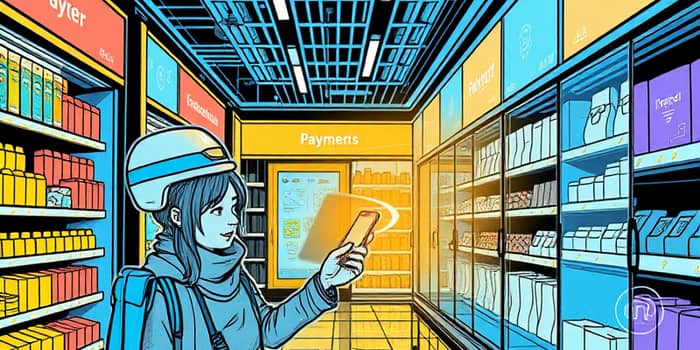
Imagine a world where selecting items and paying for them become one fluid motion. With invisible payments powered by mobile wallets and tokenized credit cards, that vision is reality.
Across stores, apps, and services, frictionless transactions are transforming how consumers and merchants interact. In 2026, nearly 90% of U.S. shoppers use contactless and digital wallet payments, and global mobile transactions exceed $6 trillion annually.
Over the past decade, physical credit cards have migrated into smartphones, smartwatches, and even connected devices. This shift has unlocked the frictionless checkout experience that merges selection and payment into a single action without manual steps.
From one-click online purchases to grab-and-go retail stores, invisible payments streamline every purchase. Plastic cards now serve as backups; digital wallets like Apple Pay and Google Pay hold the primary payment credentials.
At the core of invisible payments lies secure tokenization and biometric authentication. When you add a credit card to a wallet app, the card number is replaced by a token—a unique code useless if intercepted.
In retail environments, sensors, cameras, and IoT devices detect item selection and customer identity. On exiting, the system automatically charges the tokenized card on file. In ride-share or subscription services, stored tokens bill instantly after each ride or renewal.
By 2026, more than half of global consumer transactions will rely on card credentials. In-store contactless payments will account for 58–65% of digital purchases, while Gen Z leads with 65% preferring tap-to-pay.
Sensors and biometrics power seamless exits at Amazon Go-style stores, and mobile wallets record growth as debit cards give way to digital alternatives. Mobile payments exceed $6 trillion in volume, illustrating the industry’s rapid embrace of invisible fintech.
As tap-to-pay adoption soars, scams like ghost tapping card fraud schemes pose new threats. Fraudsters may attempt unauthorized charges if devices are left unlocked or in close proximity.
Subscription fatigue also creeps in when automatic renewals multiply. Employ variable recurring payments (VRPs) with spending caps to maintain control over your billing. Cross-border interoperability and legacy infrastructure remain hurdles for seamless global payments.
The next frontier is embedded finance: invisible payment orchestration woven into apps, vehicles, and IoT devices. AI agents will handle shopping and payment end-to-end, powered by AI-driven agentic commerce and personalization models.
Digital identity will mature, uniting consent flows, biometrics, and fraud defenses to build trust. Real-time schemes in over 80 countries will collaborate for faster cross-border settlement, while financial inclusion expands through open banking and resilient infrastructures.
The invisible wallet is more than a convenience—it represents a paradigm shift. By embracing tokenized credit cards and mobile wallets, you step into a future of unparalleled speed, security, and personalization.
Trade your bulky wallet for an invisible one today, and experience the effortless elegance of seamless payments at your fingertips.
References